Your ERP is the official system of record, but that is not the same as being a single source of truth. Real operational data still lives in spreadsheets, other systems, and manual entries, and nobody reconciles them. To get a true single source of truth, you have to connect, refine, and reconcile every source on top of the ERP, then keep it in sync automatically.
Ask almost any operations leader where the truth lives, and they will point to the ERP. It is the system that finance trusts, the one auditors ask for, the one that generates the reports the board reads. So it feels natural to treat it as the definitive answer to every question about stock, assets, orders, and costs.
But there is a quiet gap between "system of record" and "single source of truth." The ERP records what was entered into it. That is not always the same as what is actually happening in the warehouse, on the road, or in the field. Understanding that gap is the first step to closing it.
Why do teams assume the ERP is the truth?
The assumption is understandable. The ERP is expensive, central, and mandated. It sits at the top of the IT hierarchy, and everyone is told to enter data into it. Over time, "we put it in the ERP" becomes shorthand for "it is done and correct."
A few forces reinforce this belief:
- It is the official record. Finance closes the books from it, so it carries authority.
- It is centralized. One big system feels more trustworthy than many small ones.
- It is hard to question. Challenging the ERP can feel like challenging a decision that cost a fortune to implement.
None of this is wrong, exactly. The ERP genuinely is authoritative for the transactions it captures. The problem is what it does not capture, and what happens to data before and after it lands there.
Where does the truth actually live?
In practice, the operational reality of most organizations is spread across far more than the ERP. The truth is distributed, and the ERP holds only part of it.
Consider where data really sits:
- In Excel around the ERP. Teams export data, work on it in spreadsheets, and re-import selectively, or never. The working version drifts away from the system of record. This is not a fringe habit: in a 2024 KPMG survey, 47% of companies named spreadsheets as their top data management system, ahead of the 38% relying on ERP systems with dedicated modules (Source: KPMG, via ESG Today, 2024).
- In adjacent systems. A TMS knows where shipments are. A CRM knows what customers were promised. A maintenance tool knows which assets are actually broken. The ERP may know none of this in detail. The scale of this sprawl is easy to underestimate: the average organization runs around 843 applications, yet only 29% of them are integrated (Source: MuleSoft Connectivity Benchmark via IntelligentCIO, 2021).
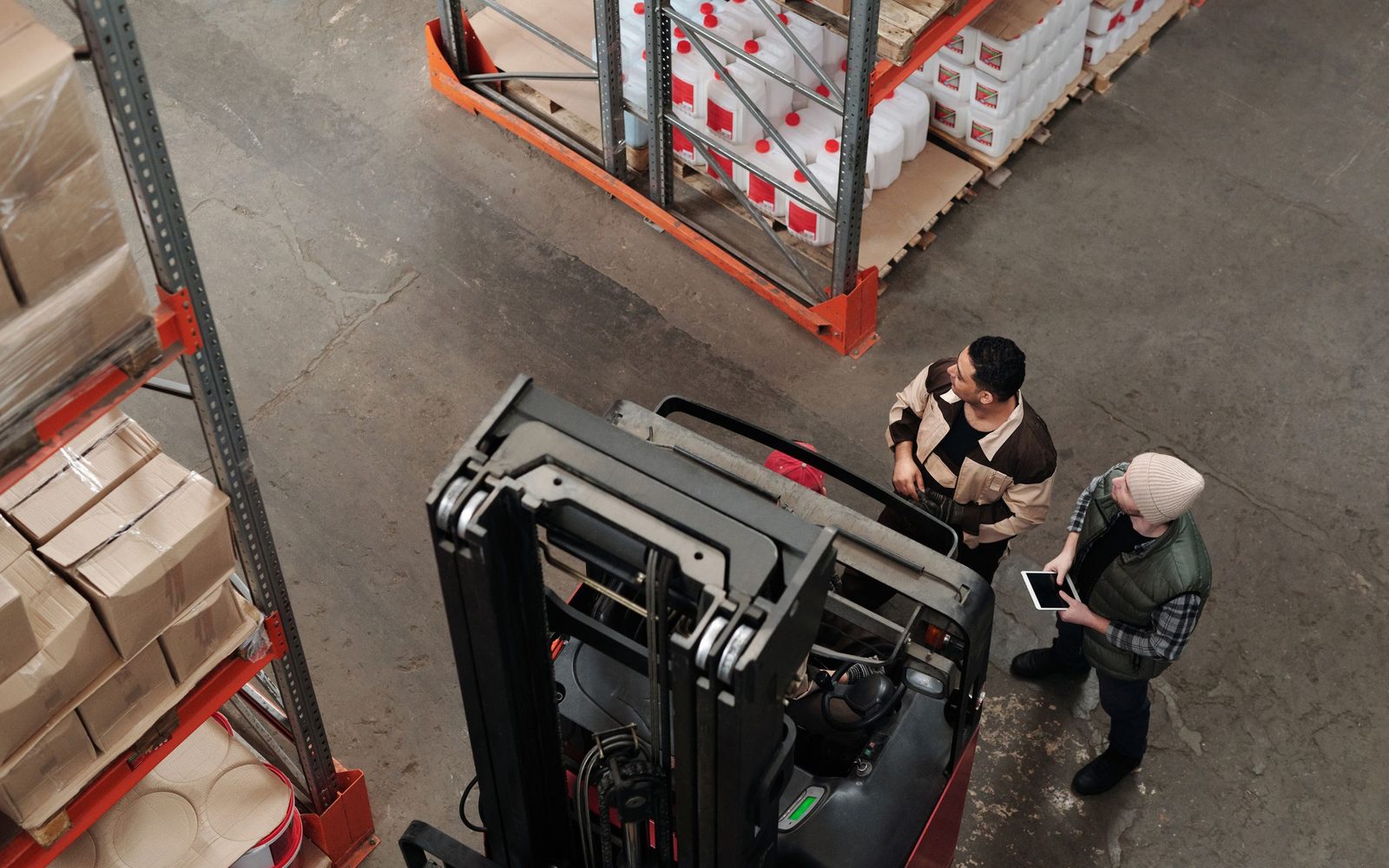
- In manual entry and timing gaps. Someone receives goods on Monday but posts them Thursday. A transfer happens physically but not yet in the system. For those three days, the ERP is simply wrong about physical reality.
- In legacy systems nobody migrated. Old plants, acquired businesses, and country-specific tools often keep their own records that never fully merged.
The ERP is one important input into the truth. It is rarely the whole truth on its own, and critically, nobody is usually responsible for reconciling it against everything else. This fragmentation is close to universal: data silos remain a challenge for 90% of organizations (Source: MuleSoft Connectivity Benchmark Report, 2021).
What does this cost in practice?
When an incomplete or out-of-sync ERP is treated as the single source of truth, the errors do not stay abstract. They turn into operational and financial pain.
Common consequences include:
- Wrong stock figures. The system says you have inventory you do not, or hides inventory you do. Both trigger bad decisions. This is remarkably common: examining nearly 370,000 inventory records from 37 stores of one retailer, researchers found 65% of them to be inaccurate (Source: DeHoratius & Raman, Management Science (INFORMS), 2008).
- Rebuying assets you already own. If tooling, spare parts, or equipment are not visible or reconciled, teams purchase replacements for things sitting in another location.
- Reporting that quietly misleads. Dashboards built directly on the ERP inherit its blind spots. The numbers look precise and authoritative, which makes them more dangerous when they are incomplete.
- Endless manual reconciliation. Skilled people spend days comparing exports, chasing discrepancies, and patching spreadsheets, which is exactly the work software should do. The bespoke stitching that tries to paper over these gaps is expensive in its own right: custom integrations cost large enterprises an average of $3.5 million each in annual labor (Source: MuleSoft Connectivity Benchmark Report, 2021).
The frustrating part is that everyone half-knows this. That is why teams keep their private spreadsheets in the first place. They trust their own reconciled view more than the "official" one, which tells you the official one is not truly the single source of truth.
See how K.IOP builds a real single source of truth on top of your ERP.
How do you build a real single source of truth on top of the ERP?
The goal is not to replace the ERP or to declare it wrong. The ERP stays exactly where it is, as a critical system of record. The goal is to build a reconciled, trustworthy layer that treats the ERP as one input among several, and produces a version everyone can rely on.
At K.IOP, the data governance and operational intelligence platform of the K-Technology & Services group, we frame this as three steps: Connect, Refine, Operate.
Connect every relevant source
You cannot reconcile what you cannot see. The first step is bringing the ERP together with the systems and files that hold the rest of the truth: the TMS, the CRM, legacy databases, and the spreadsheets people actually work in.
K.IOP uses no-code Integrations to pull from ERP, TMS, files, and legacy systems without a heavy IT project. The point is coverage. A single source of truth built from a single source is just the same blind spots with a new name.
Refine and reconcile deterministically
Once the data is together, it has to be cleaned and reconciled. This is where most well-intentioned "data lake" efforts stall, because dumping everything in one place does not make it agree with itself.
The Data Refinery, K-Refine, cleans, deduplicates, reconciles, and audits data using deterministic rules. That word matters. Reconciliation logic is explicit and repeatable, not a black box. The same inputs always produce the same output, with a full audit trail and zero hallucinations. When two systems disagree about a quantity or an asset, the rules decide which wins and why, and you can see exactly what happened.
Keep it in sync and auditable
A single source of truth that is correct once and stale a week later is not a single source of truth. The reconciled layer has to stay current as the underlying systems change, so the truth updates automatically rather than through a quarterly heroic effort.
The audit trail is what turns this into governance rather than another spreadsheet. Every correction and every reconciliation decision is recorded, so you can answer not just "what is the number" but "why is it this number, and what changed."
So should you stop trusting your ERP?
No. The right mental shift is subtler than that. Keep the ERP as your system of record. Just stop assuming that record is automatically complete, current, and reconciled against physical reality.
Treat the ERP as one important input into the truth, then build the layer that turns all your inputs into a single, reconciled, auditable view. That is what actually earns the name "single source of truth," and it is the version your teams will finally stop working around.
FAQ
Is a system of record the same as a single source of truth?
No. A system of record is the authoritative place for the transactions it captures, such as the ERP for finance. A single source of truth is a reconciled view across all relevant sources, which the ERP alone is usually not.
Why do teams keep private spreadsheets if the ERP exists?
Because they trust their own reconciled view more than the official one. Those spreadsheets are a strong signal that the ERP is incomplete or out of sync for the work those teams actually do.
Does building a single source of truth mean replacing our ERP?
Not at all. The ERP stays in place as a critical input. The single source of truth is a governance layer built on top of it that connects, reconciles, and keeps every source in sync.
What does deterministic reconciliation mean, and why does it matter?
It means reconciliation follows explicit, repeatable rules rather than guesswork, so the same inputs always give the same result. This provides a full audit trail with zero hallucinations, which is essential for data you rely on to make decisions.
How does K.IOP fit alongside our existing ERP?
K.IOP connects to your ERP and other systems, refines and reconciles the data deterministically, and keeps it synchronized with a full audit trail. Your ERP keeps doing its job while K.IOP delivers the reconciled single source of truth on top.